Welcome to Early Years
The goal of early childhood education should be to activate the child's own natural desire to learn.
Maria Montessori
Early Years Vision
At Throston Primary School, our Early Years village is a nurturing and inspiring space where every child feels valued, supported, and empowered to reach their full potential. We believe that the early years are a time of wonder, discovery, and endless possibilities. Our vision is to provide a rich and stimulating environment that ignites a love for learning, fosters curiosity, and builds strong foundations for future success.
We are committed to creating a warm, inclusive, and safe setting where children, whatever their starting point, develop confidence, resilience, and a sense of belonging. Through purposeful play, meaningful experiences, and high-quality teaching, we strive to cultivate a lifelong passion for learning.
Our goal is for every child to leave Throston Early Years setting and continue their Throston journey with a strong sense of self, the ability to form positive relationships, and the skills to embrace challenges with enthusiasm and determination. Together, with our Throston families and our wider school community, we aim to inspire children to dream, achieve, and thrive.
Curriculum Implementation
'The Statutory framework for the Early Years Foundation Stage' provides us with four guiding principles that shape practice and planning in Throston Early Years.
- A Unique Child
- Positive Relationships
- Enabling Environments
- Learning and Developing
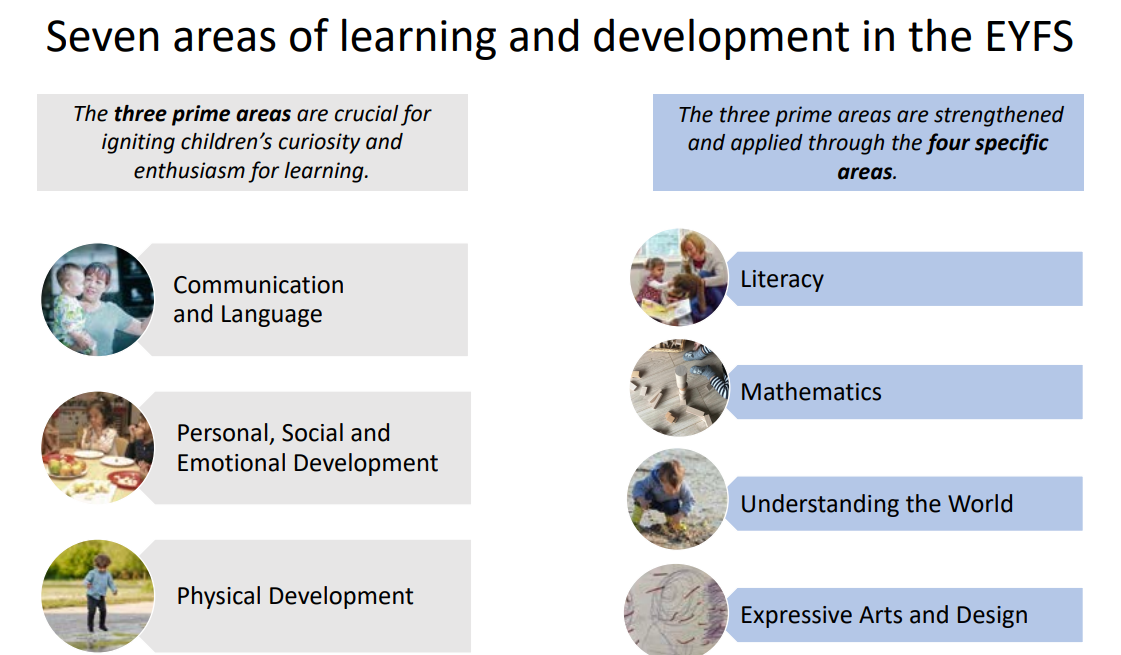
The characteristics of effective learning and the prime and specific areas of learning are all interconnected and move through all areas of learning and in all phases of the Early Years Foundation Stage.
The characteristics of learning are:
- Critical thinking
- Playing and exploring
- Active learning
Our Throston Early Years curriculum is designed with our children at the heart. It is tailored to the needs and developmental stages of our learners whilst also covering the statutory requirements of the EYFS. We have taken a thematic approach with overarching topics which give children opportunities to explore exciting activities, seasonal changes and engaging resources whilst giving the space and flexibility to cater for individual interests of the child. The curriculum is designed with sequenced skills and knowledge, from entering Nursery to the end of reception year – making sure children are fully equipped and having experienced curriculum content that will aid a smooth transition into Year 1. Our whole school rules are integrated throughout our day to day teaching and activities and with careful guidance and encouragement, Early Years children become ‘Safe, Ready and Kind’.
Assessment/Curriculum Impact
Assessment in Early Years at Thoston is an ongoing process whereby we have regular dialogue between practitioners about each child’s learning and development, to support a successful Early Years journey and smooth transition to Key Stage 1. These regular observations help us recognise children’s progress, understand their needs, and to plan activities and support.
On entry to Nursery, a baseline assessment is completed against the Prime areas of learning, followed by ongoing assessment through informal observations and planned group tasks. Tapestry is used to inform parents of wow moments in which their child has achieved. Half-termly assessments are completed on all seven arse using Development Matters statements as a guide. An end-of-year report is written for Nursery children, commenting on each area of learning and development.
The Reception Baseline assessment (RBA) is taken in the first six weeks in which children start reception. Ongoing assessment is completed throughout the year, with some wow moments recorded on Tapestry. Half termly assessment is undertaken and progress recorded. Little Wandle assessments are completed half termly – feeding into catch-up groups where required.
In the final term of the year, the EYFS Profile is completed for all children. This profile provides parents with a well-rounded picture of a child’s knowledge, understanding and abilities, their attainment against expected levels and their readiness for year 1. Parents also receive an annual report at the end of the reception year that offers brief comments on each child’s progress in each area of learning, highlights the child’s strengths and development needs and gives details of general progress.
Contact details
Early Years Lead
Mrs A Davies
adavies@throstonschool.org.uk